EDUCATION LEADERS PUSH FOR STRONGER INTERAGENCY COORDINATION TO ADDRESS LEARNING CRISIS
EDUCATION leaders from the Philippines and abroad have called for stronger coordination among government agencies and stakeholders, as well as sustained evidence-based policymaking, to address the country’s persistent learning challenges.
The call was made during the Regional Forum on Education and Learning organized by the Southeast Asian Ministers of Education Organization Regional Center for Educational Innovation and Technology and the University of the Philippines Center for Integrative and Development Studies.
Among the forum’s speakers were Dr. Marie Therese Angeline P. Bustos and Dr. Dina S. Ocampo of the University of the Philippines Diliman College of Education, Dr. Akihiro Fushimi of UNICEF Philippines, and Dr. Martin Hayden of Southern Cross University in Australia.
Fushimi emphasized that improving learning outcomes requires a more integrated approach that connects education with other services essential to child development.
“A child is not divided by departments. The missing link in the Philippine education system is the lack of real coordination across the board—one that connects education, health, and social protection from the national level down to provinces, municipalities, and barangays,” Fushimi said.
His remarks echoed findings from the Second Congressional Commission on Education (EDCOM 2), which identified factors outside the classroom as significant barriers to learning.
According to EDCOM 2’s final report, issues related to nutrition, health, learner welfare, and early childhood development continue to affect educational outcomes nationwide.
The commission reported that 23.6 percent of Filipino children remain stunted, while participation in early childhood education stands at only 30 percent, limiting school readiness and contributing to learning gaps later in life.
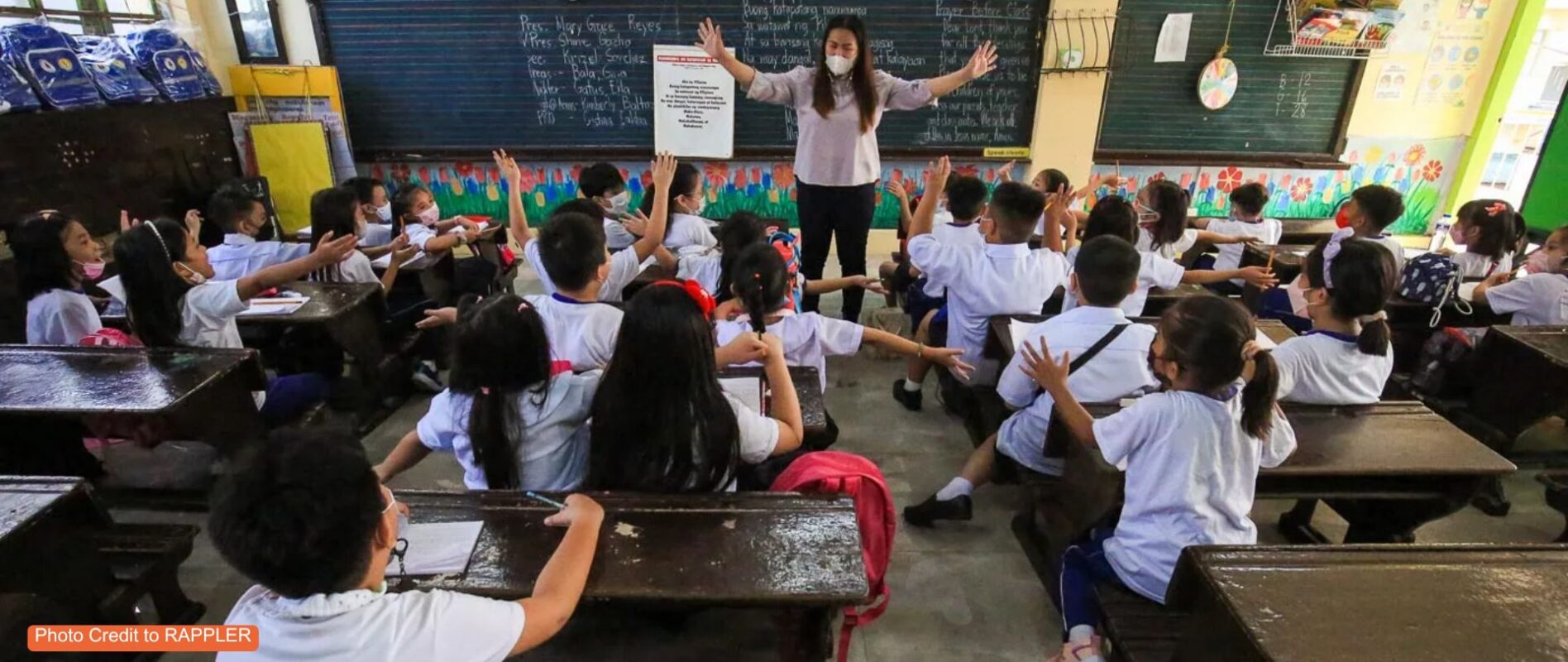
Bustos said firsthand observations in schools underscore the severity of the learning crisis.
“When we visited a school in Baseco, we saw Grade 5 learners who looked like they were in Grade 1. They are stunted and in need of remediation. We can definitely see the crisis on the ground,” she said.
Despite the challenges, Bustos expressed optimism, saying the growing availability of data and evidence provides a foundation for meaningful reforms.
“I believe there is hope because we now have information telling us that we are not okay. I think that’s the first step in fixing a broken system,” she added.
EDCOM 2 Executive Director Karol Mark Yee underscored the importance of transparency and access to information in crafting effective policies and interventions.
“We have these reports because we’ve accessed the data. There needs to be a continued push for transparency and the release of information so it can be analyzed—not only by government, but also by scholars who can scrutinize the data and generate insights that inform policy and interventions,” Yee said.
He noted that EDCOM 2’s work has demonstrated the value of making education data accessible and actionable. Through data-sharing among agencies and consultations with teachers, school leaders, learners, and communities, the commission gained a deeper understanding of the root causes of the country’s learning crisis and identified evidence-based reforms.
For her part, Ocampo highlighted the crucial role of educators in driving change despite the magnitude of the challenges facing the sector.
“I believe we have hope. We are teachers because we believe in development,” she said.
Closing the forum, EDCOM 2 Co-Chairperson and Tingog Party-list Rep. Jude Acidre urged stakeholders to move beyond identifying problems and focus on implementing solutions.
“The challenge before us now is to turn these reports into action, action into results, and results into better futures for our learners and our nation,” Acidre said.
He emphasized that building a stronger education system requires a collective effort, adding that every Filipino child deserves the opportunity to learn, grow, and thrive.
The forum concluded with a shared message from education leaders that while the challenges confronting Philippine education remain significant, stronger collaboration across sectors, greater transparency, and sustained commitment to evidence-based reforms can help improve learning outcomes for all Filipino learners.