HARVARD EDUCATION DEAN URGES ALIGNED DAYCARE, KINDERGARTEN CURRICULA TO CLOSE LITERACY GAPS
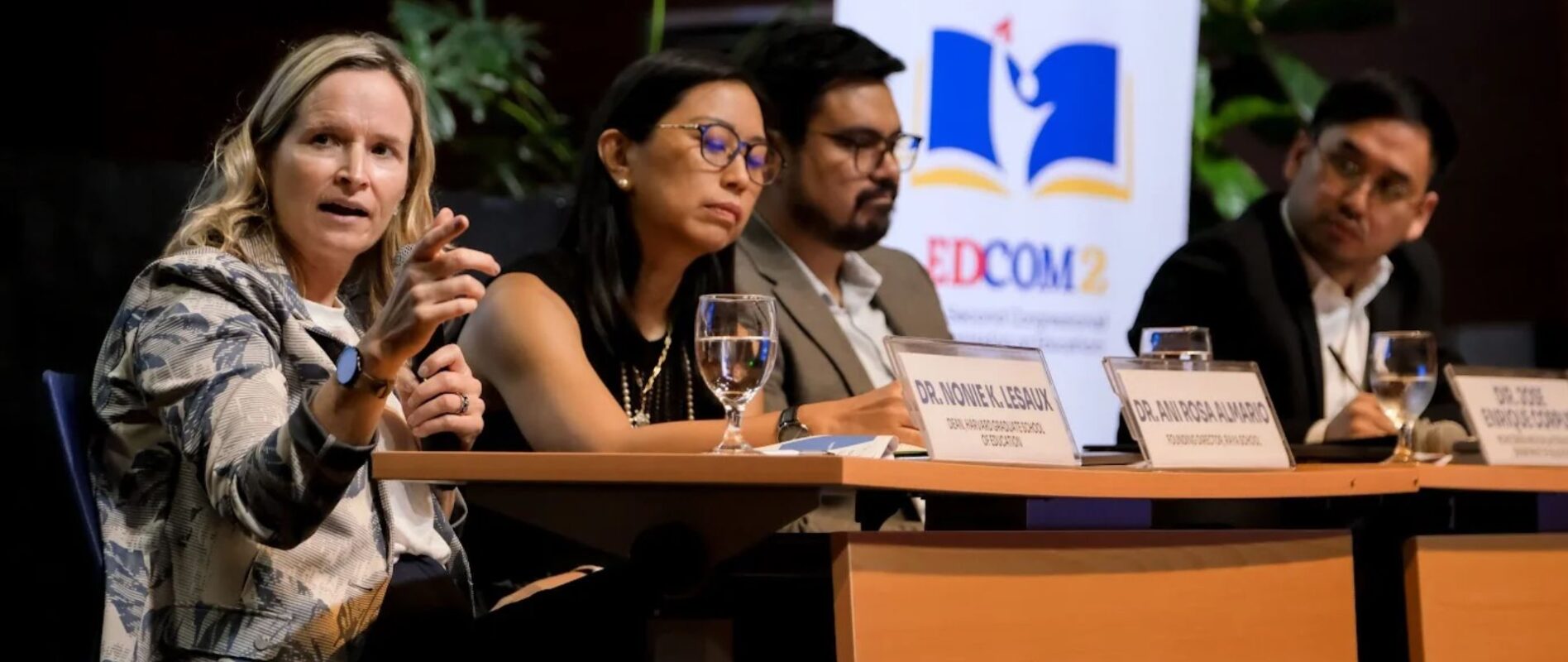
A STRONGER connection among daycare, kindergarten, and Grade 1 curricula is needed to address the country’s persistent literacy challenges and ensure that children develop essential reading skills early, according to Harvard Graduate School of Education Dean Dr. Nonie Lesaux.
Lesaux said the Philippines needs to provide children with more intensive learning experiences in kindergarten and first grade, both in terms of instructional time and curriculum quality, to develop the foundational skills necessary for reading comprehension.
“Your dosage is likely just too low, given your goals and given what it takes to get to reading comprehension,” Lesaux said during an education reform discussion organized by the Second Congressional Commission on Education (EDCOM 2).
She cited Department of Education (DepEd) data showing that as many as 75 percent of Grade 1 learners started School Year 2026–2027 classified as struggling readers based on the Comprehensive Rapid Literacy Assessment.
Meanwhile, DepEd data also showed that 45 percent of learners in Grades 1 to 3, equivalent to around 2.2 million children, are struggling readers.
Lesaux emphasized that improving early education should focus on deeper learning rather than simply adding more lessons. She encouraged educators to introduce fundamental concepts and promote critical thinking through age-appropriate, hands-on activities.
She also recommended aligning pre-kindergarten and kindergarten curricula, establishing consistent learning routines across grade levels, and providing joint training for early childhood and kindergarten teachers.
Senate President Sherwin Gatchalian said the disconnect in the country’s early education system partly stems from the fact that daycare programs are managed by local government units (LGUs), with curricula that are not fully aligned with DepEd’s kindergarten and elementary education programs.
Under Republic Act No. 12199, or the Early Childhood Care and Development (ECCD) System Act, DepEd is mandated to strengthen the connection between early childhood education and formal schooling.
Gatchalian said the goal is to establish a DepEd-led curriculum that ensures a seamless learning progression from daycare centers to kindergarten and elementary education.
EDCOM 2 Co-Chairperson and Pasig City Rep. Roman Romulo said the law has already provided the legal framework for improving early childhood education, stressing that congressional oversight will be essential to ensuring its proper implementation.
The discussion also highlighted disparities in access to early childhood education. While more than 90 percent of Filipino children are enrolled in kindergarten, only 34 percent of children aged three to four have access to early childhood education.
Data from the Department of the Interior and Local Government (DILG) further showed that 4,604 barangays still have no child development center.
EDCOM 2 emphasized that aligning early childhood, kindergarten, and elementary curricula is crucial to ensuring that children acquire strong foundational literacy skills before advancing to higher grade levels.