PBBM PUSHES HIGHER EDUCATION REFORMS TO EXPAND ACCESS, IMPROVE QUALITY
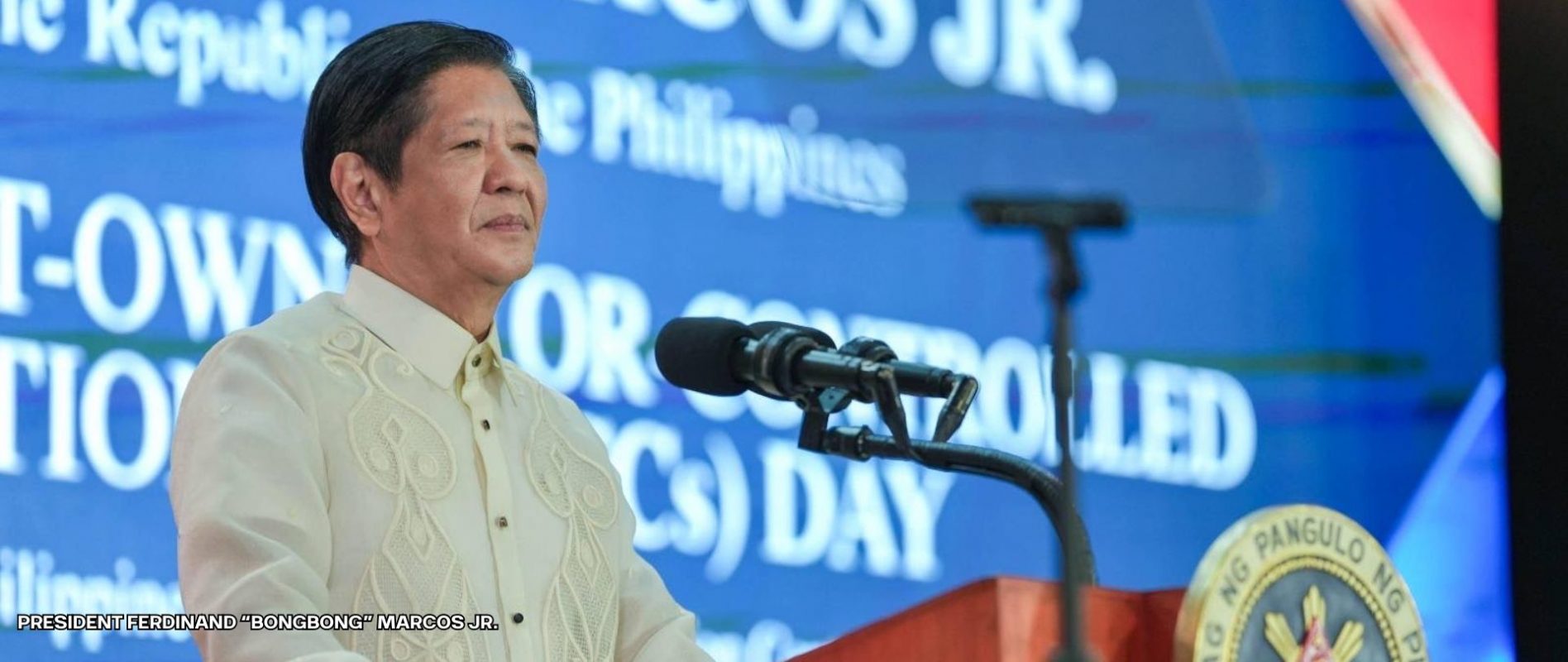
PRESIDENT Ferdinand R. Marcos Jr. on Friday advanced higher education reforms aimed at expanding access and improving quality through the rollout of major initiatives in Laoag City.
The initiatives under the PBBM-GABAY ng Bayan Programs, otherwise known as the Programa para sa Buti ng Bayan at Mamamayan: Galing, Akses, Batid at Angat Tungo sa Yaman ng Bayan, were unveiled in a ceremony at the Ilocos Norte Centennial Arena.
Marcos said the initiatives reflect a coherent and sustained approach to higher education reform, strengthening institutions while ensuring that public investments in education yield value for the Filipino people.
“When we speak of inclusive education, we speak in measurable, concrete, and sustained commitments to bring opportunities and hope closer to our learners and every family,” he said in a speech delivered by his son, House Majority Leader and Ilocos Norte 1st Rep. Ferdinand Alexander “Sandro” Marcos, during the event.
“We are reminded that education is a right that must reach every Filipino, no matter how far, how poor, how marginalized, or how difficult,” Marcos added.
A highlight of the launch was the signing of a joint memorandum circular on the policies and guidelines for the Bagong Pilipinas Merit Scholarship Program (BPMSP) by the Commission on Higher Education (CHED) and the Technical Education and Skills Development Authority (TESDA).
Representing “Galing” in GABAY, the BPMSP is a competitive, merit-based scholarship program open to top-performing senior high school graduates nationwide from both public and private schools, including the Philippine Science High School System, and qualified TESDA National Certificate holders.
The scholarship program allows the top five graduates of each senior high school nationwide to pursue undergraduate or technical-vocational programs in high-performing institutions.
Marcos said the scholarship program is aligned with the country’s priority sectors to address workforce gaps and support national development.
“But scholarships alone will not solve every barrier. We know that for many Filipino families, the first obstacle is access. And often, access begins with something basic – information,” he said, noting the launching of Project Patuloy na Edukasyon, Patuloy na Pag-Ahon (Project PEPA), a nationwide information caravan designed to provide accurate and timely information on government-funded education programs for the Pantawid Pamilyang Pilipino Program (4Ps) families.
Representing “Akses,” Project PEPA aims to reach around 490,000 senior high school graduates from 4Ps households.
To enhance transparency and data-driven decision-making, Marcos unveiled CHED-TANAW, a national higher education data visualization platform that provides integrated information on institutions, enrollment, scholarships, and graduate outcomes.
“In an age where data shapes decisions and drives accountability, we developed CHED-TANAW, the Commission’s National Higher Education Data Visualization Platform,” Marcos said. “It strengthens transparency, it supports better policymaking, and through interactive maps and official data, it guides students towards legitimate and recognized institutions across the Philippines.”
Marcos also lauded teachers, particularly those newly promoted under the Expanded Career Progression program, noting their pivotal role in shaping the country’s learners.
He urged students to seize the opportunities provided by these programs and called on educational institutions to remain united in purpose.
“Together, let us build a Bagong Pilipinas where education is a sturdy foundation for stronger families, a more capable workforce, and a more progressive nation,” Marcos said. (PNA)